
Pairing Oysters with British Craft Ciders
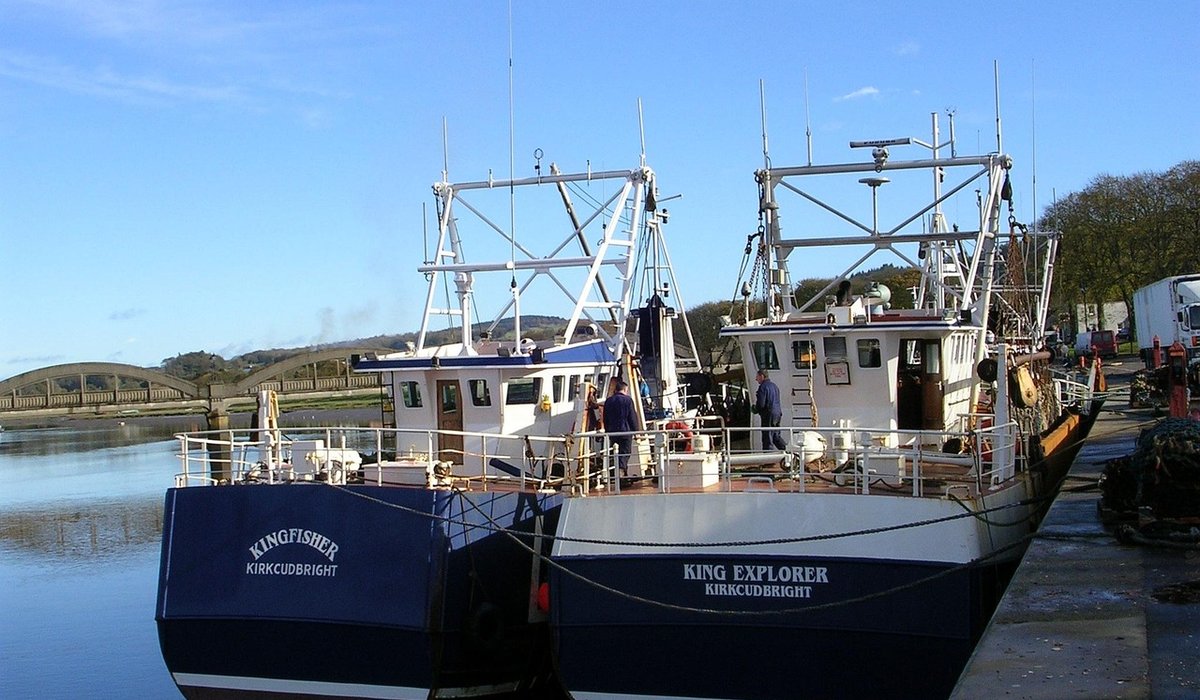
Why These Skills Still Matter
Walk along almost any British harbour wall in winter and you will find someone doing something that looks, at first glance, like nothing much. A hand moving over a torn net. A knife trimming a rope's end. A skipper watching the water rather than the clock. These small acts are the whole of the inshore industry — and they are learned, not downloaded.
Around our oyster beds, cockle grounds and crab grounds, the knowledge is specific and hard-won. It is knowing which corner of the dredge lifts cleanly over mud and which one snags. It is knowing that a certain mark on the shore, lined up with a certain buoy, puts you over the shell. It is knowing when to stay in the shed and mend gear because the wind is doing something foolish. None of it survives unless somebody teaches somebody else.
The Everyday Craft: Nets, Rope and Knots
Net mending is the first skill most coastal families pass on, usually at a kitchen table with a shuttle, a needle and a ball of twine. Beginners learn the simple weaver's knot, then how to follow the mesh, then how to work a tear back to sound netting without pulling the shape out of the panel. A badly mended trawl or stow net fishes crookedly, and crooked fishing costs fuel, time and quota.
Rope work follows quickly:
- Eye splices for mooring warps and bridles, worked three tucks each way against the lay.
- Whippings in waxed twine to stop a rope fraying, done properly rather than with tape.
- Rolling hitches and seizings to take the strain off a loaded line before you cut it.
- Creel and pot repairs, replacing soft eyes, escape panels and worn bridles before the season opens.
The point of all this is not tidiness. It is that gear repaired onshore is gear that is not lost, tangled, or fouling someone else's ground at sea.
Boat Handling and Reading the Water
Boat handling is best taught over a full season, in every sort of weather that the skipper judges safe. A good mentor will run the same drills until they are automatic: springing off a pontoon against a cross-tide, ferry gliding to hold station over a mark, coming alongside in an onshore breeze, and recovering a pot buoy single-handed without losing a finger or a propeller.
Then there is the quiet knowledge that no manual contains. How the tide sets across a channel on springs compared with neaps. How the rule of twelfths works out in your own harbour, not the textbook one. Which transits and bearings put you in safe water when the fog comes down. Where the ebb runs hardest and where a boat will lie comfortably at anchor. How to judge whether the swell outside is worth the trip at all. Learn that from an older skipper and you have gained years of hard lessons for the price of carrying his bait.
Oysters and Shellfish: Skills You Cannot Rush
Shellfish work rewards patience and observation. On the oyster beds, the difference between native and Pacific stock must be seen at a glance, and grading must be done by eye and hand — undersized shellfish go back, shell goes back, and only the right size goes into the hold. Culling is a skill of its own, and old hands will tell you they can still cull faster than a machine can sort.
There is handling too. Oysters kept alive must be kept cool, shaded and out of standing fresh water. Shellfish intended for market usually pass through purification, and everyone on the boat needs to understand why the cold chain, clean boxes and logged landings are not bureaucracy but the thing that keeps the market open. Crab and lobster work has its own disciplines: measuring, returning berried hens, v-notching where it is practised, and setting strings so that gear fishes efficiently without hammering the ground.
What Good Training Actually Looks Like
The strongest training is still one-to-one, on a working boat, across a full season. A learner needs repetition, and repetition only comes when there is real work to do. A useful arrangement is a season-long apprenticeship with a written list of things to be signed off by the skipper: splice an eye, mend a panel, shoot and haul a string, take the helm alongside, run a daily engine check, complete a catch record.
Add to that some classroom time — basic sea survival, first aid, firefighting, shellfish hygiene, food safety and radio operation — and you have a person who can be trusted with a boat and a licence. Ask any harbourmaster in a fishing port and they will tell you the same thing: the funding is always the sticking point, not the willingness. Grants from harbour authorities, community trusts and local regeneration funds are often enough to cover a training allowance, waterproofs and a set of decent knives.
Keeping It Going in Your Community
Preserving these skills is not nostalgia. It is how a coastal town keeps a working waterfront, a market and a reason for young people to stay. Practical ways to help:
- Buy direct from the boats and the beds when you can, and pay properly for quality.
- Fund a training place rather than a plaque — a season's gear and allowance goes a very long way.
- Offer space. A dry shed or a spare corner of a yard becomes a net loft and classroom in winter.
- Ask the old skippers. Many would teach gladly if someone asked them directly and respected their time.
- Support harbour training days, sea-safety courses and school visits to the quay.
Every splice taught, every tide explained, every apprentice taken on is one more year of knowledge staying where it belongs. The sea will keep testing us. The least we can do is make sure there is somebody on the next boat who already knows what to do about it.
LEAVE A COMMENT